
Indian benchmark indices Sensex and Nifty saw a significant rebound in early trade, with the Sensex surging over 700 points, driven by a decline in crude oil prices, easing concerns over Federal Reserve tightening, and the appointment of Anup Bagchi as the new MD and CEO of HDFC Bank.

Indian equity benchmark indices Sensex and Nifty rebounded sharply in early trade, with the Sensex jumping over 530 points, tracking a broad-based rally in Asian markets after four consecutive days of decline.
Indian benchmark equity indices, Sensex and Nifty, rebounded in early trade, driven by a recovery in world markets due to easing US Treasury yields and fresh foreign fund inflows, halting a multi-day losing streak. Track Sensex, Nifty on August 20.

Indian benchmark indices Sensex and Nifty saw an early rebound, driven by strong performances from blue-chip HDFC Bank and major IT firms like HCL Tech, which reported a significant rise in net profit. Track Sensex, Nifty on October 13.

Indian benchmark indices Sensex and Nifty traded lower in early sessions due to profit-taking and significant foreign institutional investor (FII) outflows, despite strong performance from IT stocks like Tech Mahindra. Track Sensex, Nifty on October 16.

Indian benchmark indices Sensex and Nifty saw a rebound in early trade, primarily driven by a more than 4 per cent surge in Tata Consultancy Services (TCS) shares following its robust Q2 net profit announcement. Track Sensex, nifty on October 9.

Online video games are emerging that recreate scenes from the Jantar Mantar protests in Delhi. Games like 'Jantar Mantar Chalo', 'Bhaag Neha Bhaag', and 'Jantar Mantar to Jail' allow players to experience elements of the demonstrations, from gathering crowds and dodging police to collecting 'Accountability' and 'Democracy' coins. Creators, inspired by news and real-life events, developed these games rapidly using AI and coding, gaining significant traction online.

The film could have been shorter and better written. However, it isn't exactly bad the way it is

Indian benchmark indices, Sensex and Nifty, saw early gains driven by strong buying in IT stocks like HCL Tech, Tech Mahindra, TCS, and Infosys, alongside a significant boost from HDFC Bank.

Indian benchmark indices Sensex and Nifty saw a significant rebound in early trade, driven by softer-than-expected US inflation data which has reinforced expectations of a less aggressive monetary policy stance from the Federal Reserve, providing relief to global risk assets.
Indian benchmark indices, Sensex and Nifty, saw gains in early trade, driven by a notable drop in crude oil prices and renewed buying interest from Foreign Institutional Investors (FIIs).

'Nana left Mumbai, its luxuries and all the roles he could have played, and moved to Pune, where he lived like a farmer.'

Delhi Police launched a massive crackdown to prevent a protest against the Chief Election Commissioner at Jantar Mantar, detaining CJP leaders Abhijeet Dipke, YouTuber Dhruv Rathee, and nearly 500 others. The city was turned into a fortress with extensive security, metro closures, and barricades. Opposition parties, including AAP and Congress, condemned the actions, calling the situation "worse than the Emergency."
Indian benchmark indices Sensex and Nifty surged in early trade, driven by a rally in IT stocks and tempered expectations of US Federal Reserve monetary tightening following softer-than-expected US jobs data. Track Sensex, Nifty on July 3.

Delhi Police launched a massive crackdown, detaining Cockroach Janata Party (CJP) leader Abhijeet Dipke, YouTuber Dhruv Rathee, and nearly 500 protesters who attempted to reach Jantar Mantar for a demonstration against Chief Election Commissioner Gyanesh Kumar. The Opposition, including AAP and Congress, denounced the situation as 'worse than the Emergency'.

India's large contingent of 501 athletes is set to compete at the 20th Asian Games in Nagoya, Japan, aiming to showcase the nation's growing sporting depth and its ambition to become a global top-10 sporting power by 2036. Despite initial accommodation challenges, the focus is on building on the momentum from the record 2022 Hangzhou Games, with strong medal hopes in shooting, athletics, cricket, badminton, and hockey.

Indian benchmark indices, Sensex and Nifty, experienced declines in early trade due to elevated crude oil prices, escalating US-Iran hostilities, and renewed concerns over a potential US interest rate hike.

Mention Anant Nag to almost anyone in Karnataka and the reaction is immediate: 'Anant? Oh my God! What a fascinating man!' 'Such an intellectual. Such a great speaker. Brilliant actor.'

From the adorably vain Poo to the free-spirited Geet, Kareena Kapoor Khan has delivered some memorable performances.
Indian benchmark indices Sensex and Nifty experienced declines in early trade, driven by a surge in Brent crude oil prices above USD 91 per barrel due to escalating tensions between Iran and the US, alongside an increase in US 10-year bond yields. Track Sensex, Nifty on August 18.

For five Mumbaikars who were teenagers or in their 20s during the 1980s, the decade was not a sepia-toned Instagram filter. It was their everyday life, they tell Rediff's Rishika Shah. And while they remember its limitations, what they seem to miss most is something technology can't recreate -- the unhurried warmth of human connection.

Indian benchmark equity indices, Sensex and Nifty, experienced declines in early trade due to a surge in Brent crude oil prices, which rose above USD 90 per barrel, coupled with subdued global cues and ongoing US-Iran skirmishes. Track Sensex, Nifty on Auigust 12.
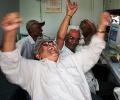
Indian benchmark indices, Sensex and Nifty, saw a significant rebound in early trade, with the Sensex jumping 726 points and the Nifty climbing over 200 points, primarily driven by strong performances in IT stocks, HDFC Bank, and renewed foreign fund inflows. Track Sensex, Nifty on July 29.

Researching Japan was like going down a rabbit hole. There is just so much to see and do, but I finally decided we would stick to the 'Golden Route' of Tokyo, Osaka and Kyoto, notes Radhika Mittal.

Indian benchmark indices, Sensex and Nifty, opened higher on Friday, primarily driven by a significant surge in Bajaj Finance shares following its strong Q1 FY27 earnings report, coupled with continued foreign fund inflows and a dip in crude oil prices. Track Sensex, Nifty on July 31.

Prime Minister Narendra Modi will launch a 100-week nationwide campaign, 'Nasha Mukta Yuva for Viksit Bharat Sankalp Abhiyaan', on August 2 to combat rising drug abuse in India. Led by MY Bharat youth, the initiative will involve various activities and aims to unite over one crore young people in a pledge against substance abuse, addressing alarming statistics from the Narcotics Control Bureau.
Indian stock market benchmark indices, Sensex and Nifty, saw significant gains in early trade, driven by a sharp decline in crude oil prices and easing geopolitical tensions, alongside renewed foreign fund inflows.

Indian benchmark stock indices, Sensex and Nifty, experienced mixed trading following the introduction of a new Closing Auction Session (CAS) for shares with futures and options (F&O) contracts, aimed at enhancing price discovery transparency. Track Sensex, Nifty on August 4

Indian benchmark indices Sensex and Nifty surged in early trade, with the Sensex jumping nearly 700 points, primarily driven by strong buying in IT stocks following TCS's positive June-quarter results and optimistic demand outlook. Track Sensex, Nifty on July 10, 2026.
Indian benchmark indices Sensex and Nifty saw a significant rebound in early trade, driven by a sharp decline in crude oil prices and easing geopolitical tensions in the West Asia, which improved market sentiment and reduced inflation fears. Track Sensex, Nifty on July 27.

Indian benchmark indices, Sensex and Nifty, experienced declines in early trade due to a surge in crude oil prices and significant selling pressure on bank stocks, impacting overall investor sentiment. Track Sensex, Nifty on July 22.
Indian benchmark indices, Sensex and Nifty, experienced declines in early trade due to a significant surge in crude oil prices, exacerbated by escalating tensions in the West Asia. Track how Sensex, Nifty fared on July 23.

Poor families, she said, cut corners on their own needs to pay for coaching and fees, and when their child clears JEE, it's the happiest day the family has had in years. So why, she asked, her voice already starting to climb, does the same system that we're told is the best in the country keep pushing those very students toward what she called 'institutional deaths'?
Indian benchmark indices Sensex and Nifty rallied in early trade, primarily driven by strong buying in IT stocks after Tech Mahindra reported a significant 28.4 per cent rise in its consolidated net profit for the June quarter.
Indian markets on Dalal Street rallied sharply as easing tensions in the US-Iran conflict and stable oil prices boosted sentiment. Track Nifty 50 and BSE Sensex performance and key global triggers.
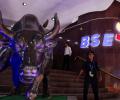
From the Sensex firms, Tata Motors jumped the most by 5.54 per cent, followed by Kotak Mahindra Bank, Trent, Sun Pharma, Axis Bank, and ICICI Bank. However, Bajaj Finance, State Bank of India, UltraTech Cement and Tata Steel were among the laggards.
Benchmark equity indices Sensex and Nifty ended lower on Monday as renewed hostilities between the US and Iran and rising oil prices unnerved investors. The 30-share BSE Sensex declined 372.10 points, or 0.48 per cent, to settle at 76,728.37.

Argentina and England are set to clash in a World Cup semi-final, marking their first such encounter, a match deeply rooted in decades of historical and footballing rivalry, including infamous incidents involving Antonio Rattin, Diego Maradona's 'Hand of God' goal, and the Falklands War.
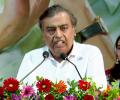
Brokerages are forecasting a strong first quarter (April-June/Q1) for Reliance Industries Ltd (RIL) in FY2026-27, with double-digit revenue growth, Ebitda increases of around 12 per cent, and net profit rising up to 10 per cent, primarily driven by its oil-to-chemicals (O2C), retail, and Jio businesses.

Indian benchmark indices Sensex and Nifty surged significantly in early trade, mirroring a global rally and a sharp decline in crude oil prices following the finalisation of a peace deal between the US and Iran to end their 107-day conflict and reopen the Strait of Hormuz.
